Corbar Woods: Larch Disease and Woodland Conservation 

In September 2025, it was identified that a number of larch trees and rhododendron in Corbar Woods, Buxton were affected by Phytophthora ramorum, commonly known as larch disease.

The infection was confirmed, and the Forestry Commission issued a Statutory Plant Health Notice (SPHN). This legally required the landowner — Buxton Civic Association (BCA) — to remove the possibility of further infection and take steps to stop the disease spreading.

As a result, all larch trees were felled and all rhododendron was removed from Corbar Woods.

This essential work was completed successfully between 5th February and 1st March 2026, helping to protect the long-term health of the woodland. During this period, some parts of the woodland and nearby paths were temporarily closed to ensure public safety.

BCA Woodland Manager, Harriet Saltis said: “Although removing trees is always difficult, this work has created an opportunity to restore and diversify the woodland. By replanting with native species and making the most of the felled material for habitats, we’re supporting wildlife while allowing new life to flourish in areas that have been shaded for many years.”

Forestry Commission Woodland Officer Tree Health, Nick added “We’re impressed with the speed and professionalism of the response of BCA. The work carried out this winter will have prevented the disease from producing spores which would have infected other tree species in the wood.”

Corbar Woods Aerial – Credited to Forestry Commission

Further Information

Phytophthora ramorum is a water-borne mould that damages the bark and foliage of trees and shrubs.
It causes dark, oozing patches on the trunk and branches which can eventually kill the tree. The only treatment is to remove the source of the spores by felling the affected trees and removing the affected shrubs. 

Over 150 plant species can be affected. Larch, sweet chestnut, and rhododendron are especially vulnerable. 

Tests confirmed that Phytophthora ramorum was present in Corbar Woods.

Statutory Plant Health Notice required that all infected and high-risk trees, larch and rhododendron, were removed. 

This action was necessary to prevent the disease spreading to nearby healthy woodlands.

Now that the felling is complete, the affected areas will be restored through natural regeneration and carefully planned replanting. 

All tree-felling was carried out by qualified contractors under professional supervision of BCA’s Woodland Team to minimise disturbance to wildlife, soil, and heritage features. 

We’re now working to re-stock the site with a diverse mix of native trees, such as oak, birch, hazel, yew, holly, guelder rose, elder, and hawthorn which are more resilient to climate change. 

We also plan to restore paths and create an open ride (clear spaces that allow sunlight to reach the woodland floor and encourage a greater variety of plants and wildlife). 

Although Corbar Woods will look different for a while, these works will help build a stronger, healthier woodland for future generations. 

Yes. Areas cleared during felling will be replanted with a variety of native tree species that are less vulnerable to P. ramorum 

Replanting will happen gradually over many years, allowing nature to take its course. This gives the existing broadleaf trees scattered amongst the larch room to grow and spread their canopies, helping the woodland to thrive. 

You can support this work by donating or joining Buxton Civic Association as a member. Your support helps fund replanting, woodland management, and ongoing conservation. 

P.ramorum is harmless to people and animals but can easily travel in mud or plant material. 

You can help prevent its spread by: 

  • Cleaning mud from boots and paws before leaving any woodlands that you visit 
  • Washing footwear (ideally with disinfectant) before visiting another woodland 
  • Staying on marked paths and keeping dogs on leads 
  • Leaving all wood, leaves, and plant material where they are 

These actions may help to prevent the spread of several pests and diseases, and it is best practice to follow this advice all year-round when visiting any green spaces. You can find out more here. 

Looking ahead 

We're working closely with the Forestry Commission to make sure this essential work protects wildlife and the wider landscape. 

Although felling infected trees has temporarily changed the appearance of the woodland, it is also an opportunity to strengthen biodiversity and woodland health, ensuring Corbar Woods remains a special place for people and nature. 

Page last updated 18/03/2026

Supporting BCA 

Managing Corbar Woods during this outbreak has been an unexpected and significant cost for BCA, especially in an already challenging financial year. Expenses include contractor costs for tree-felling, timber removal, restoration, replanting, ride creation and ongoing woodland management. 

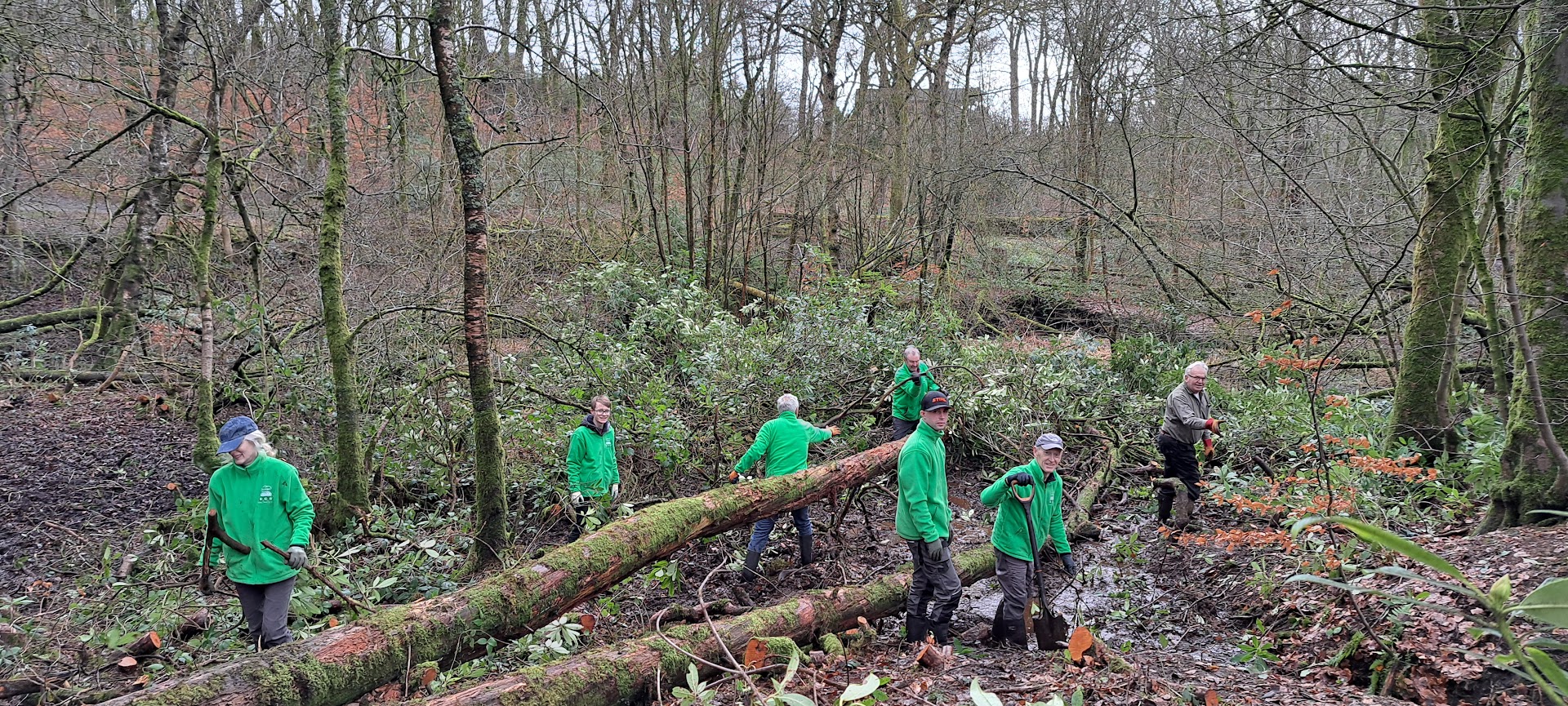
We would like to say a huge thank you to our dedicated BCA Woodland Volunteers who, between December 2025 and February 2026, contributed an incredible 332 hours to support our Woodland Team with rhododendron removal in Corbar and Gadley Woods.

You can help us continue this vital work: 

  • Donate to fund replanting, habitat restoration, and ongoing woodland management 
  • Become a member of Buxton Civic Association to support our conservation work 
  • Volunteer with our Woodland Team to give practical support, or find out about our other exciting opportunities to support BCA 

Every contribution, whether financial or in time, helps ensure Corbar Woods remains healthy, resilient, and accessible for future generations.